Showing posts with label moving abroad. Show all posts

Wednesday, 11 July 2012

Insight: Teaching in Japan


Interested in travelling and teaching, but not sure what your options are? Want to learn more about teaching in different countries? That's why we're quizzing former TEFL Worldwide graduates on what they know. 

Before coming to Prague, I spent 16 months teaching English in Hamamatsu, Japan. You can see my blog "Gwynnie's Adventures in Japan" for a greater insight, but I'll try to summarise things here. 

How easy is it to find a job in Japan?
Gwynnie outside Hamamtsu castle

It depends. If you're already there, you can pick up private students and apply everywhere. There is high demand for native English speakers, especially if you don't only stick to the main cities (less competition). While it's possible to fund your own visa and go over there, most companies hire from abroad, meaning you interview in your home country (via Skype, telephone or one of their branches). If you go for JET, the application takes a year and it's quite hard to get onto. I went with Interac, who place assistant language teachers (ALTs) in classrooms all over Japan. After my initial application, it took a month or two to hear from them, and while they didn't hire everyone at my interview, they hire potentially hundreds of ALTs every year. You don't really need any teaching experience or Japanese ability for the ALT jobs - what you're doing is a little teaching and a little acting like an ambassador for your country! They want someone friendly and bubbly who they don't think will cause them much trouble. 

What's the money like? What's the cost of living?

The money is good - on average 250,000JPY a month, which is around $3000, give or take. Some private conversation schools, and JET, pay more. If you pick up private lessons (some jobs let you do this, too) you can find yourself earning anything from 3000 to 10,000 for a 90 minute "conversation" lesson. The longer you're there, the more contacts you can make who will hook you up with these nice lessons. I was lucky enough to be one of the only British females in my city, so I was offered a lot of classes.

On the other hand, the cost of living is high. A 19m² apartment set me back 60,000JPY a month, while additional costs - electric/water/gas bills, health insurance, pension payments (if you make them... you can claim them back when you leave) and, after your first year, something like council tax, will leave you with something like 130,000 a month to actually spend, perhaps less. You'll be lucky to find a beer under 500JPY, although many izakayas (bar/restaurant type place) offer "all you can drink" menus, some as cheap as 900JPY for 90 minutes of unlimited drinks. Put it this way - in my first year, I never had any money left at the end of the month, but I was able to survive, go for a couple of meals/nights out a week and travel around the country every couple of weekends. In my second year, I moved in with my boyfriend - we looked around and found a place 3 times the size of the first apartment, but for the same price. Now paying only 30,000 a month in rent, and taking on a bunch of private classes through contacts we'd made, we were able to put away around $1000 a month (each)! There are also plenty of second hand stores for furniture, clothes etc, and the longer you stay, the more money-saving tips you'll learn. So, for a year, you will have a great time but save little. If you stay longer, you can start stashing away the cash.
  
What kind of teaching will I be doing? 

From a 12 year old boy at my junior high!
If you go through an ALT programme like JET or Interac, you'll be teaching in public schools. This is a fascinating insight into Japanese culture, as you will get the chance to see how a Japanese school runs from day to day. You could be in junior high, high school, elementary or even kindergarten - often a mix! Some ALTs have one or two schools that they switch between, while others might have as many as 14 schools that they visit (one a day on a 2-week schedule). This kind of teaching is done alongside a Japanese teacher of English (the JTE), who may or may not be fluent enough in English to communicate well with you. Make sure you speak very slowly, and try to learn some Japanese! This can be an advantage - less pressure on you to perform, as you may only be asked to "teach" for around 15 minutes of the lesson, usually nothing more taxing that reviewing the things they've already done with a game. It can also be very boring or frustrating - it all depends on the teachers you end up with. Some of mine were great, while others made me grit my teeth and watch the clock. If you're willing to try your Japanese with the school staff, you'll find that they open up and can be very nice people. Many ALTs also eat lunch with the kids and join in with after school clubs - playing sports with the kids is a great way to get to know them a little better - and might be invited on day trips. A couple of times, I went on a walk with my junior high to pick up rubbish from the local riverside. 

Generally, the level of English in Japan is quite low - I think the lowest in Asia. Reasons behind this could be due to a number of factors - mostly, I think it's because of their "island mentality", the belief that the rest of the world is a distant place that has no real relevance to their lives. Most plan to stay in Japan forever, and see no need to learn English. On top of that, the way it is taught is quite counter-intuitive (to a Westener, anyway), with JTEs mostly speaking in Japanese and telling kids how hard English is. You will often find this quite frustrating, although it definitely varies between schools. For every handful of kids who will stare at you during class, glassy-eyed and apathetic, there will be a super-sweet, enthusiastic kid who goes to after-school English club and restores your faith in humanity with their innocent excitement over having a simple conversation with you. Speak as simply as you can, sneakily let them know you know a bit of Japanese (even if your company tells you never to use it with them) and pretend to be really into the same things as they are (anime, usually) and you'll win them over. As I said, part of an ALT's purpose is to get the kids interested in other countries - the JET programme was started to improve international relations. 

Harajuku, Tokyo - yes, those are balloons!
Alternatively, you could work for a conversation school (eikawa), such as AEON, which is a different story. Here, your working hours will be different from an ALT's Monday-Friday 8-4... think more Monday-Saturday, 12-10pm. You will be in charge of your own class, meaning more freedom but also more responsibility. Conversation schools usually teach both children and adults, although you can look this up before you apply. If you only wish to teach adults, it's possible to do that. From what I hear, the children at conversation schools are a little harder to handle, as they tend to be from privileged families and might not want to learn English. The adults, however, are learning because they want to, and are likely to be much more enthusiastic. If you teach private lessons, it could literally be anything - some of mine included: one-to-one in Starbucks, breaking down the meaning of sentences in Nineteen-Eighty-Four and opening random pages of a grammar book; a 90-minute conversation with a group of middle-aged businessmen in a bank, they rarely get to speak English so just talking to a native speaker is great for them; babysitting a 3-year old kid while speaking English to him; myself and a few other native speakers at a bar, mingling with Japanese people of all ages who wanted to practice English, while having free drinks bought for me; a one-off, 2-hour lesson on a topic of my choice, mixing speaking, grammar and reading activities. If you like every day to be different, acquire enough private lessons and they definitely will be! I also found that many adult students are fascinated with travel and other cultures, so showing them things like money from your country, English flyers/menus/magazines and photos of your home town go down a treat. 


What are the pros and cons of living in Japan? 

So many of both! I'd recommend you have a look at my blog, as I go into quite a lot of depth in articles like "The Other Side of the Coin (and How to Deal with it)", "Things I will (and won't) Miss about Japan" and, for what I miss now that I'm not there, "The Post-Japan Blues". 


In summary though - the pros. The money is good, and it's possible to save up a lot. Japan is a clean, safe country, with people who are mostly very friendly and helpful. Ask a Japanese person for directions and they'll usually walk you to your destination! Drop your wallet and someone will chase you down the street to give it back. I usually felt safe there. However, don't drop your guard too much. Friends of mine report being followed home by creepy guys, and plenty of crime does happen; it's just covered up and ignored a lot of the time. Still, it's a first-world country, the water is safe to drink (hopefully) and, as you'd expect, a lot of modern technology makes life quite convenient. The convenient stores - "combinis" - are open 24 hours a day, and sell so much more than just food (think shirts, socks, photocopying and postal services, household products, magazines etc). 


Arashiyama, near Kyoto
There's a lot to see and do in Japan - every day can be an adventure. Your first trip to the shops will be exciting enough, with all the new food and symbols you can't read. If you choose to learn Japanese (and I'd suggest it), you'll unlock a little more of this mysterious country every day. The excitement you get at recognising a particular "kanji" can be very rewarding. Japan offers skiing, surfing, mountain climbing, theme parks, nice temples, and plenty of interesting things to see and do. Although the shinkansen (bullet train) is expensive, it means you can get from one end of the country to another pretty easily (it might take around a day, though). 


Life is mostly stress-free there, especially if you work with a company like Interac. When I arrived, we were given a week of training, and then introduced to our "I.C." - a nice Japanese lady who spoke English, took us to our apartment and helped us settle in. Mine took me shopping for furniture (well, a futon and some kitchen things) and helped me set up my resident card, health insurance and everything else. Doing that on your own would be pretty hard, but all I had to do was fill in the forms she gave to me. My I.C. even came with me and held my hand when I had to have my wisdom teeth extracted. Most people were very friendly and encouraging, and my city had a big expat population and a lot of Japanese people who were keen to learn English, meaning that I had a great social network who were always up for a bit of karaoke or a barbecue on the beach.
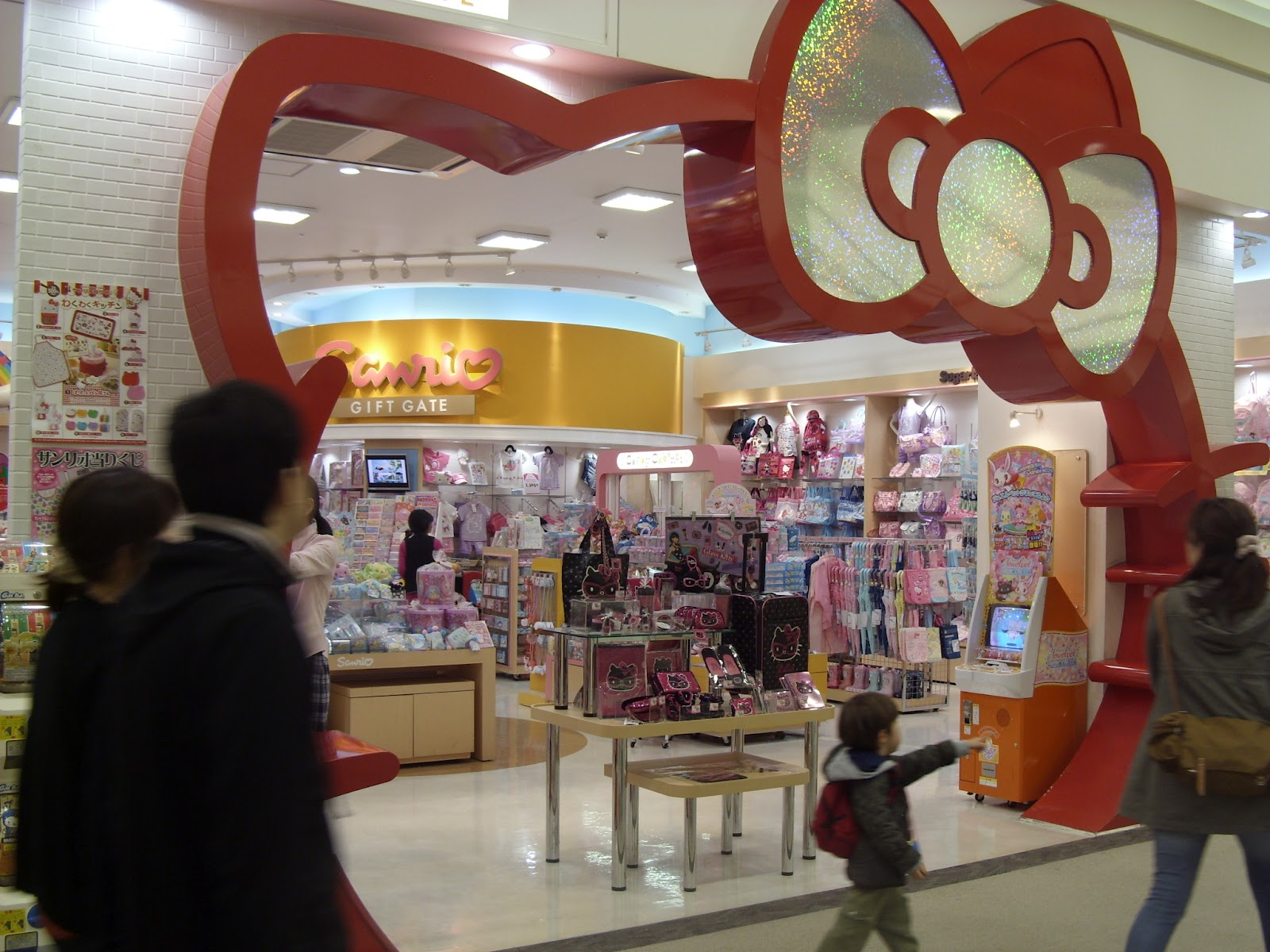
I hope you like Hello Kitty...


On the other hand, a lot of things can get you down. The initial culture shock might lead you to feel that you have stepped into a magical fairytale, but after a few months (as is natural with culture shock) you might find yourself very homesick. The food is so different; although there are chains like McDonalds and KFC, it can be hard to find any "home-like" food; even to find the right ingredients at the supermarket. Japanese food is not heavy on dairy, meat or bread products, and if you're not used to that, it can take some time to get used to. If you eat school lunches with the kids, like I did, you might find yourself trying to stomach a few nasty seaweed soups or the dreaded "natto". The way of thinking in Japan is very different, too - you might often find yourself frustrated with the strange logic used there! Just remember that you're not there to change the country to your way of thinking, and try to go with it and keep a "foreigner" support network to help you adapt! 

It can be hard to find clothes that fit, if you're anything over a UK size 10, as well. My city had a few second hand shops frequented by the surprisingly large Brazilian population, so it was possible to find things in my size, although I mostly used internet shopping. If you can fit, be warned that clothes (like most things) are pretty expensive in Japan. As I mentioned, going out for a drink can be costly - it ends up being far cheaper to buy the "all you can drink" packages! And while Japan seems a convenient place to explore the rest of Asia, finding a flight to any other country in Asia for under $300 was quite a challenge. Another thing that winds a lot of people up is the subtle attitude towards foreigners, that many find racist. This isn't as bad in bigger cities, but should you find yourself the only foreigner in a small village, expect to be followed and gossiped about often. Your attempts at speaking Japanese might be greatly patronised, as will your chopstick skills (think "WOW! You can use chopsticks!!"). The way you interpret this will depend on your ego, though, I think. 

Overall, I am very glad that I went to Japan. I found that I was capable of doing so much more than I thought possible, and I met a lot of great people and had a fantastic time. I definitely do not regret going. One note - I was there when the big earthquake/tsunami happened, albeit 400km away. We felt the earthquake, and it was scary. Fears of radiation still abound, and nobody is totally sure of how safe it really is. Companies near Fukushima seem to offer higher salaries for English teachers these days, so it's really up to you to decide whether you feel safe being near the area or not. If earthquakes and radiation worry you, perhaps you should look for jobs near Kyoto or further south, for example Hiroshima or Fukuoka, or - if you prefer a milder climate and snow - somewhere up north in Hokkaido. You're sure to have a great time if you go with an open mind and a smile. Feel free to comment below with any questions! 

Tuesday, 29 May 2012

Insight: Teaching in Saudi Arabia


Interested in travelling and teaching, but not sure what your options are? Want to learn more about teaching in different countries? That's why we're quizzing former TEFL Worldwide graduates on what they know. 

Victoria Baardsen is originally from the U.S.A., and graduated from TEFL Worldwide in 2011. She had some teaching experience prior to coming to Prague, and now she teaches in Saudi Arabia. So, here are some of the questions I'm sure you want to ask!

How easy is it to find a job in Saudi Arabia?

You need to have some experience, a college degree, and a TEFL certificate of at least 120 hours (like TEFL Worldwide). This is one country that only hires native speakers of English.

What's the money like? What's the cost of living?

The money is excellent. You get: (a) free housing, (b) free electric, water, and transportation. (c) It's tax free. You can make very good money if you can handle the big difference in culture! Not everyone can handle the extremes, and remember that you'll have to give up: alcohol, dating, a free life, wear an Abaya if you are a woman, give up driving if you are a woman, a single life, etc. It is not easy, but doable if you view as a sabatical from life where you go and get paid really well for the job.  


On the other hand, the cost of living is cheap! Remember that you're not paying for rent or bills. A decent meal costs around 100 ryals ($25 US, £17). A short taxi ride is about 5 ryals, but you have to know the area to effectively negotiate. Your employer provides housing, but if you want to go live on a compound they want you to pay all rent up front for a year in advance, and that's what makes it expensive. Food? Going shopping and buying local adds up to about 300 ryals. 
  
What kind of teaching will I be doing? 

If you are a woman, you can only teach women, and that goes for men/men as well, because it is a segregated community. Actually you can and will teach all levels in all settings because the country is determined to learn English. The whole country is moving towards a global economy - they know they need to speak English in order to run their own country. They are under going "Saudization." That means that an employer's staff must be 80% Saudi. It also means that the population must improve their English. They also want their country run/operated by Saudi's; not by Ex Pats. Today, their country is managed and working by a nearly 100% Ex Pat labor, because the skills that are needed are not in the Saudi population. But, they see it, and are working on solving that problem with education! So, the push is on getting English into the skill set so they can operate their country and speak to the world using the worlds' business language. In other words, everybody wants to learn English!

You must be hired prior to arrival-you cannot show up and search. It's a country concerned about terrorism, and immorality, i.e., drinking alcohol, etc. Someone must hire you, and vouch for your presence. You cannot wander around without a sponsor. You'll have get a contract, offer, from a Saudi employer, and they help you to get that visa. There are plenty of jobs advertised online, for example at tefl.com or eslcafe.com. 

What are the pros and cons of living in Saudia Arabia? 

Well, as a woman there are a lot of cons - especially since we are westernized and used to alot of freedom, but it's doable. What you have to accept without question, as a woman, is that: You must by law wear an Abaya in public. A head scarf is not required, but expected. You cannot drive a car or even sit in the front seat of a car.Also, you cannot date or even be in the company of a man you are not married or related to-no exceptions are given to expats. You cannot go to a restaurant as you would at home. You, as a woman, go to the family section, or you order curb side, and they deliver it to you on the street. You cannot eat in a male / mixed company restaurant. You can't drink alcohol, and you cannot walk the streets easily-women are transported, so don't expect to see a woman running, or riding a bike, that is also a no no. Men definitely have it easier.

However, the pros are definitely the money, the free housing, electricity and transportation, tax free income (for Americans), and just the food, the culture and the people. Although it's very challenging to be here as a woman, it is also an amazing experience that I do not regret. Just bear in mind, teaching ESL in Saudi Arabia is not comparative to any other country you have ever taught in and if you come here, be prepared to adjust your teaching style to meet the cultural differences. It's a big change, but it's doable!  I have many (female) ex pat friends, and some native friends that I made through work (although it is illegal for me to have male friends). 

It is challenging to work here, but not impossible. You just have to be mindful of the cultural differences, follow the rules, and you can make good money, and have a nice time. It's a time for reflection, and work, not so much on entertaining, but that's a good thing if you are working on a Masters, or other educational ventures. Finally, even though Saudi is very different than my culture at home, I have adjusted, and find it rather peaceful. If you have projects at home: Masters, Doctoral, etc, then you can get that done here; because you will find not much else to do but focus!

Best of luck & thank you TEFL WORLDWIDE for giving me the career I dreamed about and never thought possible! 


Tuesday, 15 May 2012

Insight: Teaching in Prague

Of course, TEFL graduates work in many different countries - but, if you're taking TEFL Worldwide Prague, there's a pretty good chance that you're thinking about staying on and finding a job in Prague. As somebody who completed the course and stayed on, I'll attempt to answer some of your questions about it. I have also consulted some of my friends here, as we all have different experiences to talk about.

How easy is it to find a job?
It seems that this is the main thing that people ask! Well, it completely depends. The peak hiring times are September (as language courses start their year in late September) or January (semester 2 starts in January), but different schools vary - and as teachers are constantly coming and going, there are schools that hire year-round. Experience, TEFL and your attitude will make a lot of difference. If you walk into an interview and sound as if you don't really care about teaching or know what you're talking about, it will show. It also depends on how much effort you put - sending off a couple of CVs won't cut it! There are at least 100 language schools in Prague, and not all of them advertise jobs directly - the best bet is to start emailing your resume during the TEFL course.

Most graduates find jobs within a couple of weeks of the course. Of course, it is easier for EU citizens as we don't need a work visa - we can accept part-time work with a variety of schools and build a schedule from that, while non-EU citizens who don't have a business license need to find a full-time employer (more on that in a minute). Personally, I found a job while I was still on the course (in August), and all of my non-EU friends who were staying in Prague had started working within two weeks of graduating. Some take longer than others, but I honestly don't know anyone who graduated from TEFL Worldwide and had to leave because they didn't find work. Also, remember that the office staff offer lifetime job assistance - that doesn't mean they'll get a job for you, but they will help you brush up your resume, advise you on schools and make sure you have the contact details of all the language schools.

What's the money like? What's the cost of living?
The Czech Republic uses a currency called koruna (Czech crown), which is around 20 to the American dollar (or 29/30 to the British pound) at the moment. An average salary for an English teacher in Prague ranges from around 16,000Kc to 20,000 a month, although it is possible to make more. This is lower than the salary for teaching English in many countries, but the real question is how far that money will get you.

To give you an idea of the cost of living in Prague, a month's rent will set you back anything from 5000 to 10,000 a month, depending on location and whether or not you share. You can find flat shares on a lot of websites (expats.cz or prague.tv, for example), or you can search websites like Happy House Rentals or Home Sweet Home for an idea of what to expect. To give you an idea, my boyfriend and I found a cute flat near Flora metro station (10 minutes from the centre), nothing fancy but a big bedroom, spacious kitchen and small living area, and including utilities the price was 13,000 a month (so 6,500 each). A monthly travel pass, giving you unlimited use of trams, buses and the metro, is as little as 550Kc a month (if you register for an "Open Card"), and even a train ride across the country will be less than 200Kc. My weekly grocery shopping generally comes to around 300Kc (only £10!), but it depends on whether you shop like a local or seek out imported products from your own country (which is, of course, more expensive).

As for all those other fun things - a half-litre glass of delicious beer can be as little as 20Kc (although more usually around 30), and a hearty meal, on average, around 120Kc. Of course, it depends where you eat and drink, as staying near the city centre will inevitably set you back a lot more than if you avoid the tourist traps. Take some time to research the more reasonable places and save yourself some money. Entry to nightclubs is generally around 100Kc, with the more expensive cocktails coming to around 150Kc each. During the daytime, you can visit museums for around 200Kc or take a visit to the cinema for a bit less. Generally, it is difficult to save up a lot of money while you live here, unless you really watch the purse-strings - but it is perfectly possible to go out to eat two or three nights a week, drink a lot of beer and have a fantastic time without hurting for cash. After all, the average salary for a Czech person is Prague is somewhere between 20 and 25,000 (according to my students), and most popular Czech pastimes (hiking, kanoeing, camping etc) are cheap and a lot of fun!

What kind of teaching will I be doing?
Again, it depends! There are all kind of jobs that you can do. You might work at a kindergarten or pre-school, doing crafts with children and teaching them a little English in the process. You might work at a language school, providing general English to a range of classes - usually sticking with a weekly class for the year, working through a text book. Some students will be preparing for exams (the Cambridge English exams are the most common here), so it will be your job to prepare them for these with mock tests and plenty of homework. You might travel from business to business, teaching company employees Business English, or you might just engage in general conversation with those who want to keep on top of their fluency. You might end up doing a mixture of all of these!

As mentioned before, if you're not an EU citizen and you don't have a business license, you'll need to find a company that will help you get your work permit. This technically means working at least 20 hours a week for them. Before you accept any jobs, it is important to find out whether they will help you with this - and, of course, the TEFL Worldwide office staff will help you with everything that this involves! If you have a business license (called a zivnostensky list) or are an EU citizen, you will be able to bill multiple clients or become employed on short-term contracts, meaning that those companies that only have 2 or 3 classes to offer can pad out your schedule. When I started, I accepted jobs with three different language schools - each one only offered me a few hours at first, so I was able to make a schedule from those. Usually, over time, these schools will offer you more and more hours (if you prove yourself to be reliable), but it can be difficult to rely on this at first. You can also find private students here (if your contract does not state otherwise) over websites like teacher-creature.cz to supplement your income, which could mean anything from company lessons without the middle-man to meeting at a coffee shop for a chat.

What about the visa/work permit?
We'll post more about this in future - for now, it's best to contact us to find out about your country's situation. Generally, though, if you are non-EU, you can apply for a zivnostensky list or you can find a job that will help you with your work permit. Many companies will not pay for your visa, but will deduct it in small monthly chunks from your salary - the important thing is that they will help you get a work permit, which will then enable you to get a work visa. The conditions and regulations for this change very often, so it's really better to talk to us about it - by the time you read this, the rules might have changed again!

What are the pros and cons of living in Prague?
Well! I can tell you from personal experience - living in Prague is a lot of fun. The city is beautiful and rich with history.

You can barely walk around a corner without finding some old church or cobbled street. What I particularly love is the fact that Prague has everything you'd need in a city - great shopping malls, cinemas, theatres, art galleries, museums, classy bars, grungy pubs, nightclubs, parks, even a fairground - and yet it has not been ruined by modernness. Many travellers I've encountered on their way through Europe remark that they have fallen in love with Prague, and you probably will too. Just take a stroll over Charles Bridge at night, catch the funicular up to Petřin or try some of the many, many wonderful beers at Letna park and you'll see what I mean.

The city is loaded with culture - there's no shortage of shows, art exhibitions and museums to visit, and a look at the calendar on expats.cz or prague.tv will show you that there's always something going on. You'll also see that the expat life is rich here - even if you don't speak Czech, you can always find something fun to do and new people to meet. Of course, living in the city is wonderfully affordable, too - as I said, beers for around 25Kc means that you can have a good night on around £5! Nice meals, too, can be as cheap as 90Kc, and there are a lot of good restaurants to seek out, whether you want traditional Czech food, pizza, Thai, Chinese, sushi, Indian curry or a decent steak.

On top of that, Prague has a wonderful public transport system. The metro system is simple and easy to understand, and the network of buses and trams mean that it is easy to get around the city at ANY time (there are night trams and buses that run all night!). The website http://www.dpp.cz/en/ will help you plan your route. As I said before, a monthly travel pass is only 550Kc, and as long as you have it on you at all times, you can travel freely on any mode of transport around the city. It is generally easy to get around the city, and also to set yourself up. After living in Japan, I was amazed at how easy it was to find an apartment here - we set up a viewing, said we wanted it, signed a contract and paid a deposit - and it was ours!

On the down side, the relatively low salary makes it hard to save up money, if that's your aim. If you like to travel on the weekends, you could find yourself burning through your funds quite quickly - especially in you travel west (Eastern European countries are generally much more affordable). Certain items - like make-up, clothes and household goods might also be more expensive (relatively) that you're used to (although many Czech people pop over the border into Germany for these). A lot of my friends have left for pastures new because they felt that they weren't making enough money. When you factor in that you don't get paid for travel time or lesson planning at some jobs, you can feel that your efforts bring a low reward.

For those non-EU citizens, or EU citizens getting a business license, the paperwork and bureaucracy that you have to face can be quite daunting, but it can be done! Expect to go from office to office, and over the border to Bratislava, Berlin or Vienna, to validate your documents. To add to the fun, a lot of the staff at the foreign police won't speak any English, so it might be helpful to enlist the help of a Czech friend - you can also hire translators, but this is an expensive alternative.

Another thing that might strike you is the lack of decent customer service. This is not true in every restaurant, but more often than not you will find cold, inattentive and sometimes downright rude behaviour from waiters and waitresses. Fortunately, you don't have to tip 10% (although many still do) - and, of course, the service is better in touristy places. This is changing, though, and I can recommend some great places. Many bars and restaurants now have an English menu, but not everywhere - so learn some Czech food words and bring a dictionary! Czech is a hard language to learn, but it is possible to survive without speaking it.

Finally, the winters get pretty cold - around -20C this last February. Prague doesn't see much snow, but the rest of the country does - if you like skiing, this is a great place to be. The summers reach around 30 or 35, with this last year bringing a lot of intermittent rain. It's good if you don't like overly hot climates, and not so good if you're not used to the cold. Still, the indoor heating is good enough to keep you warm when you're inside!

Will I need to learn Czech?
In short, no - although it is always nice to learn a little of a language before you move to a country. I feel that people generally appreciate a "dobry den" (hello), and it might improve your customer experience a little. These days, most people speak at least a little English (younger generations, especially), so it is definitely possible to survive on a day-to-day basis without speaking Czech. It's when you get into the territory of paperwork and other complicated matters that it comes in handy. There are "English speaking" services available - banks, doctors etc, but be careful of the hefty price tags that come with it. A lot of places might just happen to have employees that speak a good enough level of English, or you can bring a Czech friend! It is a difficult language to learn - tough pronunciation, noun declension and other exciting things - but there are plenty of "Czech for Foreigners" courses around the city, and of course TEFL Worldwide will teach you a few basics during the course!
-

I hope that has given you a nice insight into living here! Please contact us if you have more questions - the office staff can put you in touch with previous graduates from the programme, letting you ask them for their own insight and advice. You can also post your own questions on here, and I'll try to answer them!


Sunday, 13 May 2012

Preparing for Living Abroad

Moving to another country on your own, with no job or accommodation secured? Many people would freeze at the very thought, and many of your friends have probably told you that you're crazy for considering it. When you dream of adventure, of soaking up a new culture, meeting new people and having amazing experiences - all while making money from doing something that's fun - the idea seems wonderful and exciting. But it can be incredibly scary, too, especially when you don't know what to expect.


I moved to Japan on my own in March 2010, and although I did have a job secured, the company only told me where I would be around ten days before I flew out. I knew nobody, hardly anything of the culture (apart from what a few books had told me) and could barely speak the language. Looking back on it now, those months were some of the best of my life. In fact, I loved the experience so much that I did it all over again in August last year, when my boyfriend and I moved to Prague with nothing but our acceptance onto TEFL Worldwide. 


Like many of you, we had no idea of how things would go. Would we survive the course? Would we find a decent place to live? Would we find jobs? I can tell you, now, that everything worked out. But I have met plenty of people who came over with no plan, no idea of what they would do after completing the course, and who had not prepared themselves well enough to cope with the reality of living in another country.


So, before you get on that plane, have a look at this checklist and make sure that you're prepared for your new life in another country.


1) Research the passport/visa requirements - if you are not an EU citizen, you can stay in the Schengen zone (a lot of countries, including the Czech Republic) for up to 90 days as a tourist before you have to leave for another 90. You'll need a business license or a work visa after this, although the office staff at TEFL Worldwide keep up to date and will let you know the requirements. It surprises me how many people arrive with no idea about their legal status in the country. In some countries, you might even need to sort this all out before you leave your home country. Making sure of this before you land will relieve a lot of stress and save you a lot of time and energy!


2) Make sure you have enough money - the set-up costs are far higher in some countries than others, but think about the fact that you'll need to cover your accommodation and food costs during your TEFL course and for a couple of months afterwards. Even if you find a job straight away, many will pay you for a month's work the following month, meaning that starting a job in September might mean you don't see any money for it until sometime in October. You might also want to travel on the weekends, and don't underestimate how much money you might spend partying with all your new friends! I can't give you an exact figure for how much is "enough", but have a look at the cost of living for the country you're going to, ask other people who live there or have been there, and try to calculate something based on your own lifestyle.


3) Talk to people in the know - you might know somebody who already lives there, or who has lived there. If not, there are plenty of forums out there for expats living in various countries. ESL Cafe has forums for teachers in almost every country, while expats.cz is an invaluable resource for anybody living in the Czech Republic (especially Prague). These people have been in your shoes - they also moved over, knowing hardly anything or anyone, and can give you advice. Besides, you never know, you might find yourself making new friends before you even arrive!


4) Tie up your loose ends at home - living abroad should not be a way to escape your problems. The world is getting smaller, and these things can catch up with you - especially if you don't have a long-term plan and find yourself going home again. Remember the old saying - "Wherever you go, there you are" - if you are leaving because you are unhappy at home, it's worth spending some time working out what you want and how to make yourself happy before throwing yourself into a new life. Culture shock can be a nasty pill to swallow all by itself.


5) Minimise culture shock - culture shock is a lot more than being surprised by new customs and ways of life. Serious culture shock can leave you isolated, unhappy, afraid of leaving the house and reluctant to involve yourself in any aspect of the new culture. Of course you will get homesick at times, but remind yourself of why you're moving - to experience something new! Some of the ways in which you can minimise the impact of culture shock are: learning some of the language before you arrive, reading up on the culture as much as possible, and keeping a small support group around you. You'll meet plenty of people on TEFL Worldwide who are in the same boat as you, and these friends can seriously help you to adapt in a new place.


6) Don't over-pack! - I met a girl on my course who had brought 15 pairs of shoes, several storage boxes and an apple corer with her, among other things. It can be hard to think of what you will and won't need in your new life, but it is impractical and expensive to bring along things that you can buy easily in your new home. Again, researching beforehand will give you an idea of what you can get hold of easily and what you might need to bring. In Japan, I brought a lot of clothes, because it was very hard to find clothes in my size there. This isn't a problem in Prague, and the only things I really felt the need to bring were personal items - my laptop, some books, that kind of thing. Check your airline's baggage limits, too - you might end up paying a lot more than planned if your suitcase is too heavy.


7) Read up on the culture and recent events - unless you really want to be one of "those" loud, obnoxious foreigners who inadvertently offend all the locals, it can be very useful to read up on social norms and things to watch out for. That way, you can be tactful, and avoid doing things that might annoy or shock your new hosts - after all, these people are your new neighbours, service providers, co-workers, students and friends. You want them on your side! This will also help to keep you safe - if you're moving somewhere more dangerous than you're used to, you can find out which parts to avoid and read up on tips for minimising risks.


8) Take small steps - the way I dealt with the "oh-help-I'm-moving-to-Japan-alone-ARGH!" panic was to break everything up into small steps in my head. For example, first, all I had to do was get through the security checks at the airport. Then, all I had to do was sit through a 12-hour flight. Then, all I had to do was find the train station from the airport. Breaking things down into more achievable, bite-sized chunks helped me to cope with the magnitude of what I was doing, and by the time I was starting my job in Japan (and later, in Prague) I looked back and thought "Wow, I did all that!". 


Finally, remember that you can contact TEFL Worldwide with your questions, and that even after you graduate from the course, we'll be around to help you out, wherever you go!